New Rental Regulations 2026 in Ireland – What Landlords Need to Know
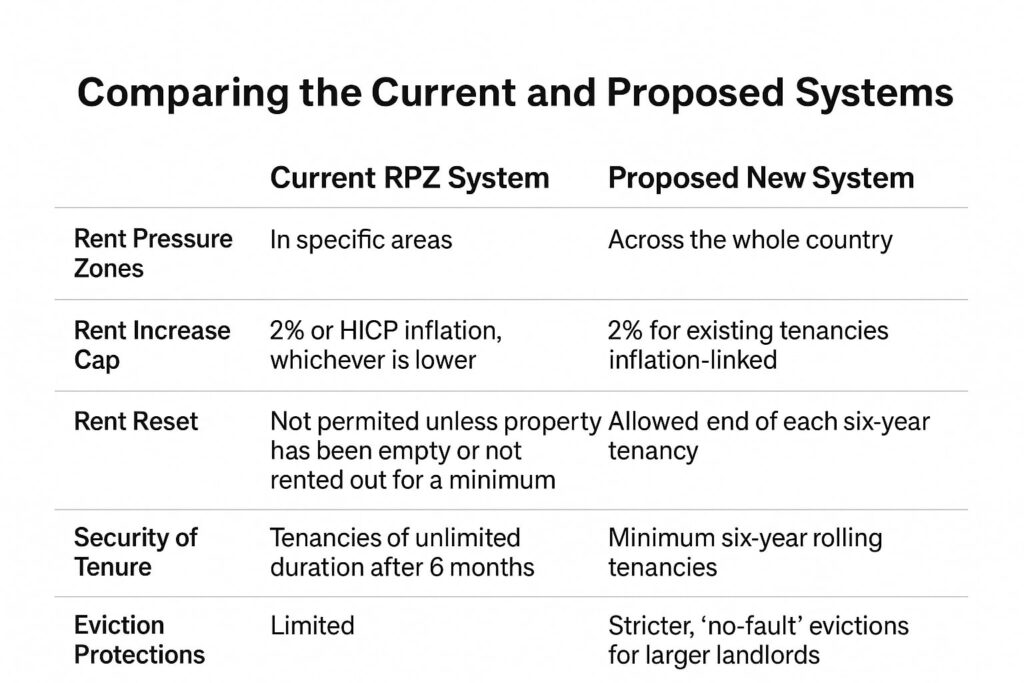
New rental regulations in Ireland 2026. The Government proposed a major overhaul of Ireland’s rental regulations, due to come into effect in March 2026.
This guide will help you understand the new rental rules coming in March 2026 and prepare your property with confidence.
Whether your property is in Bandon, Kinsale, Clonakilty, Skibbereen, Cork City, West Cork or anyway in Ireland, knowing the detailed changes now will protect your investment, ensure compliance, and keep your tenancies running smoothly.
What Are the Key Changes Coming to the rental regulations in March 2026?
From March 1, 2026, all new tenancies will be affected by legislation designed to:
- Introduce 6-year rolling tenancies
- Cap rent increases at CPI or 2% annually
- Allow market rent resets under specific conditions
- Expand landlord compliance and documentation requirements
- Strengthen tenant protections and RTB enforcement
These changes affect all landlords, whether you own a single property or multiple units.

How Will the Rent Cap and Market Rent Reset Work?
For new tenancies starting from 1 March 2026:
- You can set the initial rent at market level if the previous rent was below market and the prior tenant left voluntarily or breached lease terms.
- Subsequent rent increases are capped at the lower of the Consumer Price Index (CPI) or 2% annually.
- Existing tenancies on 28 February 2026 will adopt the same rent increase cap.
- Market rent resets are allowed at the end of rolling 6-year tenancy terms, but only if no “no-fault” eviction occurred during that cycle.
This ensures both landlords and tenants have predictability while still reflecting market conditions over time.
What Are the New Rules About Ending a Tenancy in the new rent regulations 2026?
All new tenancies will be rolling 6-year agreements, giving tenants longer-term security. Landlords can only end a tenancy during the 6-year term for specific reasons:
- Tenant breach of lease
- Property no longer suitable for tenant needs
Small landlords (3 properties or fewer) may also terminate for:
- Financial hardship
- Occupation by a close family member
At the end of each 6-year term, small landlords can end tenancies for:
- Sale of property
- Family occupation
- Renovations
- Change of use
Large landlords (4+ properties) cannot end tenancies for sale, renovations, occupation, or change of use, but can end for tenant breaches or unsuitability.
Can I Sell My Property With a Tenant In Situ?
Yes. The rules allow tenant-in-situ sales, meaning you can sell a property while it remains occupied by tenants. This gives landlords flexibility without breaching new legislation.
What Compliance Steps Should I Take as a Landlord?
To stay compliant, you should:
- Familiarise yourself with tenancy duration and termination rules
- Update leases to align with March 2026 legislation
- Prepare documentation for rent setting, tenancy notices, and RTB registration
- Keep maintenance records, BER certificates, and evidence of compliance with property standards
Organised records and updated leases will help avoid fines, disputes, or invalidated tenancy actions.
Does the new rental regulations Apply to Current Tenancies or Only New Ones?
Existing tenancies in place on 28 February 2026 remain under previous regulations, but rent increases are capped at the CPI or 2%.
What Are the Consequences of Breaching the Law?
Non-compliance can lead to:
- Fines
- Legal disputes
- Terminations or rent increases being invalidated
Staying proactive now is the best way to protect your investment.
How Can Landlords Start Preparing Now for the new rental regulations?
Review your property condition – plan upgrades for fire safety, insulation, heating, and BER ratings.
Update documentation and leases – ensure all records meet new requirements.
Communicate clearly with tenants – explain changes and maintain strong relationships.
Plan for market rent resets – track when each tenancy’s 6-year term ends.
Seek professional guidance – DNG Galvin can help with compliance, valuations, and property management.
Property Lettings & Management Cork
If you require guidance with your rental property or want to ensure compliance with the new 2026 rental rules, contact DNG Galvin today. Our experienced team can provide expert advice, valuations, and management solutions tailored for landlords in Cork and West Cork.
Frequently Asked Questions (FAQs) for Landlords
1. How will rent increases work from March 2026?
Rent increases are capped at the lower of CPI or 2% annually. Market rent resets are allowed at the end of each 6-year tenancy term, provided no “no-fault” eviction has occurred.
2. Can I still sell my property with tenants living there?
Yes, tenant-in-situ sales are allowed under the new rules.
3. Who can end a tenancy and when?
Small landlords can end a tenancy during the 6-year term for tenant breaches, financial hardship, or family occupation. Large landlords can only end for tenant breaches or unsuitability. At the end of the 6-year term, small landlords may also end tenancies for sale, renovations, occupation, or change of use.
4. Do the new rules affect current tenancies?
Only new tenancies from 1 March 2026 are fully covered. Existing tenancies remain under previous rules but adopt the rent increase cap.
5. What happens if I don’t follow the new rules?
Non-compliance can lead to fines, legal disputes, and invalidated tenancy terminations or rent increases.
Thinking of selling your rental property or require advice on property management?
Contact DNG Galvin today
Follow DNG GALVIN on Facebook for the latest property updates
Pagespeed Optimization by Lighthouse.

Sell Your Property
Sellers’ FAQs
Buy or Rent A Property
Residential
Commercial
Land
New Homes
Online Auctions
Buyers’ FAQs
Let Your Property
Get a Valuation
Services
Buyers Coach NEW!
DNG Galvin
Market Buildings, New Road
Bandon, Co. Cork
+353 23 884 4958
info@mgalvin.ie